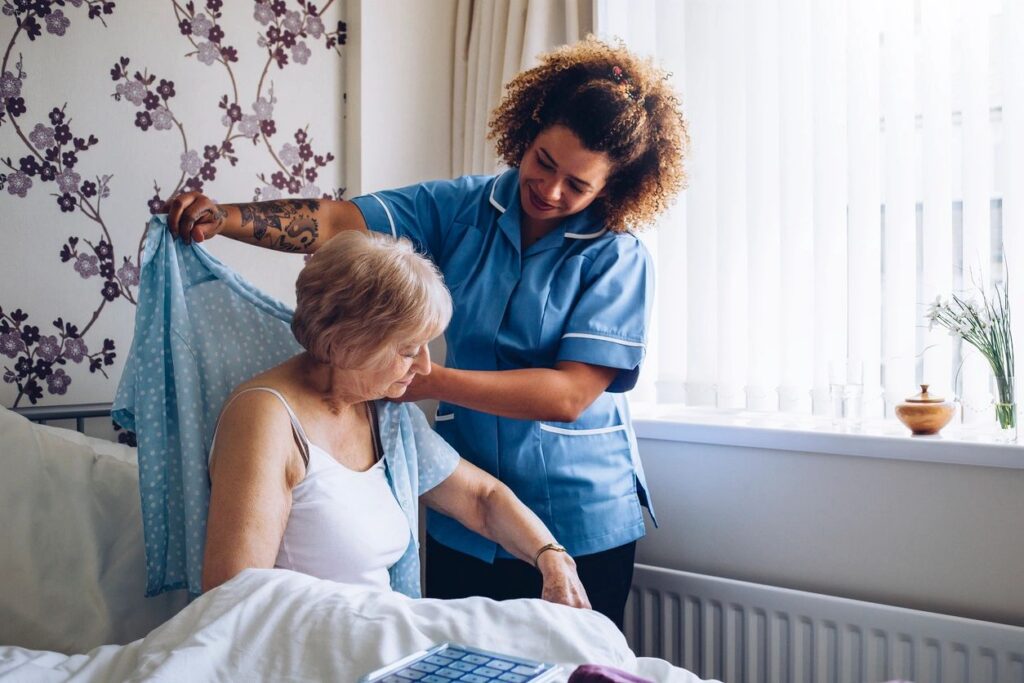

Caregiving fills the day with tasks. Medications, meals, laundry, phone calls, appointments. The feelings that come with the work often get pushed aside because there is no time and no place to put them. A journal gives them a place. Ten minutes with a notebook will not change the situation, but it can change how heavy it feels.

Why writing works for caregivers
Writing forces scattered thoughts into sentences. That alone lowers stress for many people. A worry that circles in your head at 2 a.m. looks smaller on paper, and sometimes a solution shows up once the problem is written out plainly.
Journaling also builds a record. Caregivers make dozens of small observations a day: he ate less today, the new dose seems to help, she was confused after the nap. Written down, those notes become useful. Patterns appear. Your hospice nurse gets better information at the next visit, and you stop carrying every detail in your memory.
There is a third benefit, quieter than the first two. Caregiving can swallow your sense of your own life. A journal is one thing that belongs only to you.
Getting started
There are no rules. Paper or phone, full sentences or fragments, daily or twice a week. A few practical points:
- Pick a regular slot. After breakfast, during your loved one’s nap, the last ten minutes of the day. Attach it to something you already do.
- Keep it private. Write honestly because nobody else will read it. If privacy is hard at home, a notes app with a lock works fine.
- Start small. Three lines count. A list counts. On a hard day, one sentence counts.
- Do not edit. Spelling and grammar are not the point. Cross things out if you want.
What to write about
Staring at a blank page is the main reason people quit. Prompts remove that problem. Rotate through these:
- What happened today. The plain facts: visits, symptoms, appetite, sleep, mood. This is the part that turns into a useful care record.
- What was hard. Name it directly. A difficult phone call, a moment of impatience, the sadness of watching someone decline. Writing it tends to loosen its grip.
- What went right. One good moment. A laugh, a calm hour, a neighbor who showed up. Caregiving days contain these, and they are easy to forget by bedtime.
- What I need. Help you have not asked for, rest you have not taken, a question for the hospice team. Needs written down are more likely to get voiced.
- What I want to remember. Things your loved one said, stories they told, how they were today. Families often treasure these pages later.
A journal as a care tool
Beyond the emotional side, a caregiver journal earns its keep in practical ways. Note medication times and reactions. Write down questions as they occur to you, so the next nurse visit covers all of them. Track sleep, pain levels, and appetite in a line or two a day; trends that are hard to see in the moment become obvious across two weeks.
It also helps families share the work. A sibling who visits on weekends can read the recent entries and understand where things stand without a long briefing.
When writing is not enough
A journal is a support, not a treatment. If low mood, anxiety, or exhaustion stops easing up, or if you stop sleeping and eating yourself, tell your hospice social worker. That is part of their job, and they can connect you with more support. Shining Light’s bereavement support continues for 13 months after a death, with calls and mailings, and the team can point you to help during caregiving too.
Start tonight if you can. One page, honest and unpolished. Most caregivers who keep the habit say the same thing: the work did not get easier, but they felt less alone inside it. Questions about support for caregivers are welcome at 702-906-0044, any hour.