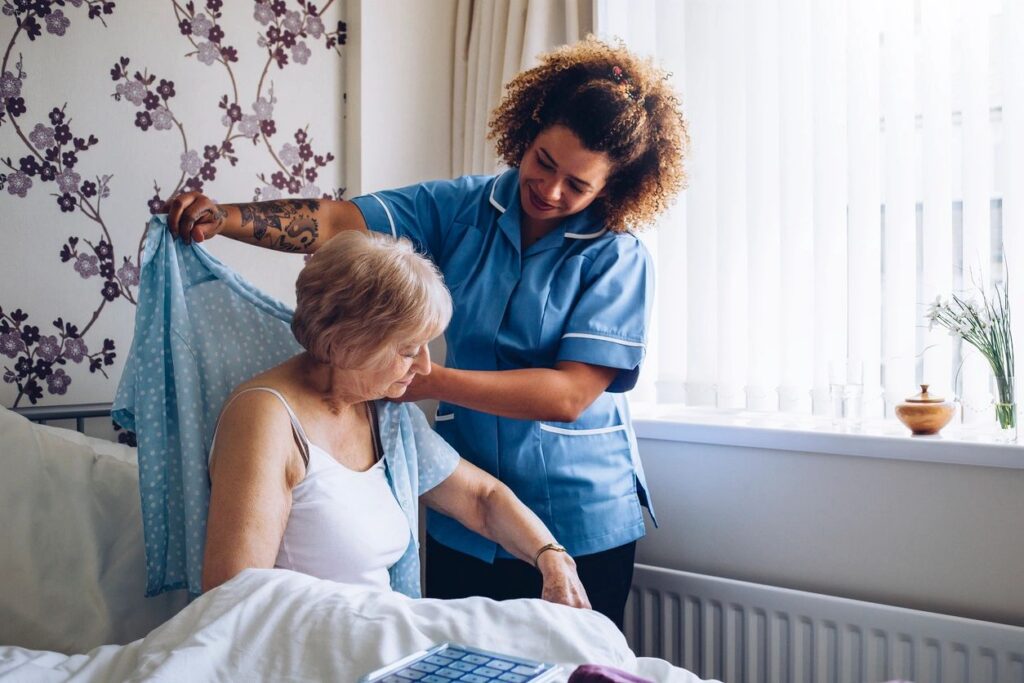

COPD does not end in a single event. It narrows a person’s life a little at a time: shorter walks, harder nights, more trips to the hospital. Hospice becomes an option when breathing problems run daily life and treatment stops keeping the flare-ups away. A physician still has to certify that life expectancy is six months or less if the disease follows its usual course. The seven signs below are the pattern that usually tells families and doctors the time has come to ask.
1. Breathless at rest, not only on exertion
Early COPD steals breath on stairs and hills. Advanced COPD steals it in a chair. Talking comes out in short phrases. A walk to the bathroom needs a rest stop. When a person is short of breath sitting still, the disease has moved into its final stage, whatever the calendar says.
2. Flare-ups keep ending in the hospital
Repeated emergency room visits and admissions are the loudest signal. Each flare-up takes something the patient does not get back: a little more strength, a little more lung, a little more confidence. Two or three hospital trips in six months, with a lower recovery each time, is the pattern hospice eligibility was built for.
3. Oxygen has become a full-time companion
Many patients start oxygen at night or during activity. In advanced COPD it runs around the clock, the tubing follows them from room to room, and the flow rate creeps up. Needing continuous oxygen does not by itself qualify a person for hospice, but combined with the other signs here it is part of the picture physicians weigh.
4. The body is losing ground
Weight drops without dieting, sometimes ten pounds or more over a few months. Muscles thin. Dressing takes a rest break. Many patients start sleeping in a recliner because lying flat makes breathing worse. Breathing this hard burns calories at rest, and eating takes breath too, so meals get smaller at exactly the wrong time.
5. Infections and medication rounds repeat
Pneumonia, bronchitis, another course of antibiotics, another round of steroids. Each one helps less than the last, and the good stretches between them get shorter. When the medicine cabinet is working harder and the patient is not, the treatment plan deserves a hard look.
6. Carbon dioxide builds up
Healthy lungs clear carbon dioxide with every breath. Failing ones cannot, and the buildup shows up as morning headaches, daytime drowsiness, and confusion or agitation during flare-ups. Families often notice the personality change before anyone names the cause. It is a recognized marker of advanced disease.
7. Their goals have changed
Sometimes the clearest sign is a sentence: no more hospitals. A patient who has been through the ICU, the ventilator conversations, and the long recoveries may decide that home is where they want to be, with breathlessness treated there. That decision is the patient’s to make, and it is reason enough to ask for a hospice evaluation.
What hospice does for COPD at home
The fear with COPD is a breathing crisis, so the plan starts there. Hospice nurses build a breathlessness plan for each patient: medicines kept at home for air hunger and the panic that comes with it, oxygen adjusted to comfort, nebulizer treatments, and coaching on position and pacing. A small fan moving air across the face eases the feeling of breathlessness for many patients. When a flare starts at 2 in the morning, the family calls the hospice number and gets an on-call nurse, around the clock, instead of deciding alone whether to call an ambulance. Caregivers are taught what to do in the first minutes, and respite care is available when they need rest. For eligible patients, Medicare Part A covers the hospice care, including the medicines and equipment tied to the illness.
Questions families ask
Does hospice mean stopping oxygen or inhalers?
No. Oxygen and inhalers that keep a patient comfortable continue. What stops is treatment aimed at reversing a disease that cannot be reversed.
Can a COPD patient stay on hospice longer than six months?
Yes. Six months is the certification standard, not a deadline. If a patient stabilizes, care continues as long as they remain eligible at recertification, and some patients improve enough to leave hospice and return later.
What happens during a breathing crisis at home?
Call the hospice number first. The nurse guides the family through the medicines already in the home and comes out when needed. The goal is to treat the breathlessness where the patient is, rather than in an emergency room, unless the patient wants hospital care.
Does Medicare cover hospice for COPD?
Yes. COPD is a qualifying diagnosis when a physician certifies the prognosis. Shining Light also works with Medicaid and most private insurance, and coverage is checked before care starts.
Shining Light Hospice serves Las Vegas, Henderson, Summerlin, North Las Vegas, Boulder City, and Pahrump. If breathing has become the center of your loved one’s life, call 702-906-0044 and ask for an evaluation. Our phones are answered around the clock.